ECUADOR VOLCANOES3 SUMMITS
15 days along Ecuador's Avenue of the Volcanoes to climb three glaciated summits — Cayambe (5,790 m), Cotopaxi (5,897 m) and Chimborazo (6,310 m / 20,702 ft), the country's highest peak.
Duration
15 days
Grade
Beginner-friendly · High Altitude
Altitude
2,800 – 6,310 M (20,702 FT)
Season
NOVEMBER – FEBRUARY · JUNE – AUGUST
(01) Overview
Three summits on the Equator.
Ecuador is a country of exquisite scenery, warm people and outstanding mountains. If you are relatively new to mountaineering, or experiencing real altitude for the first time, this is one of the best programs in the Andes to start with: three glaciated volcanoes above 5,700 m, all by non-technical routes, in a compact 15-day itinerary that begins and ends in Quito.
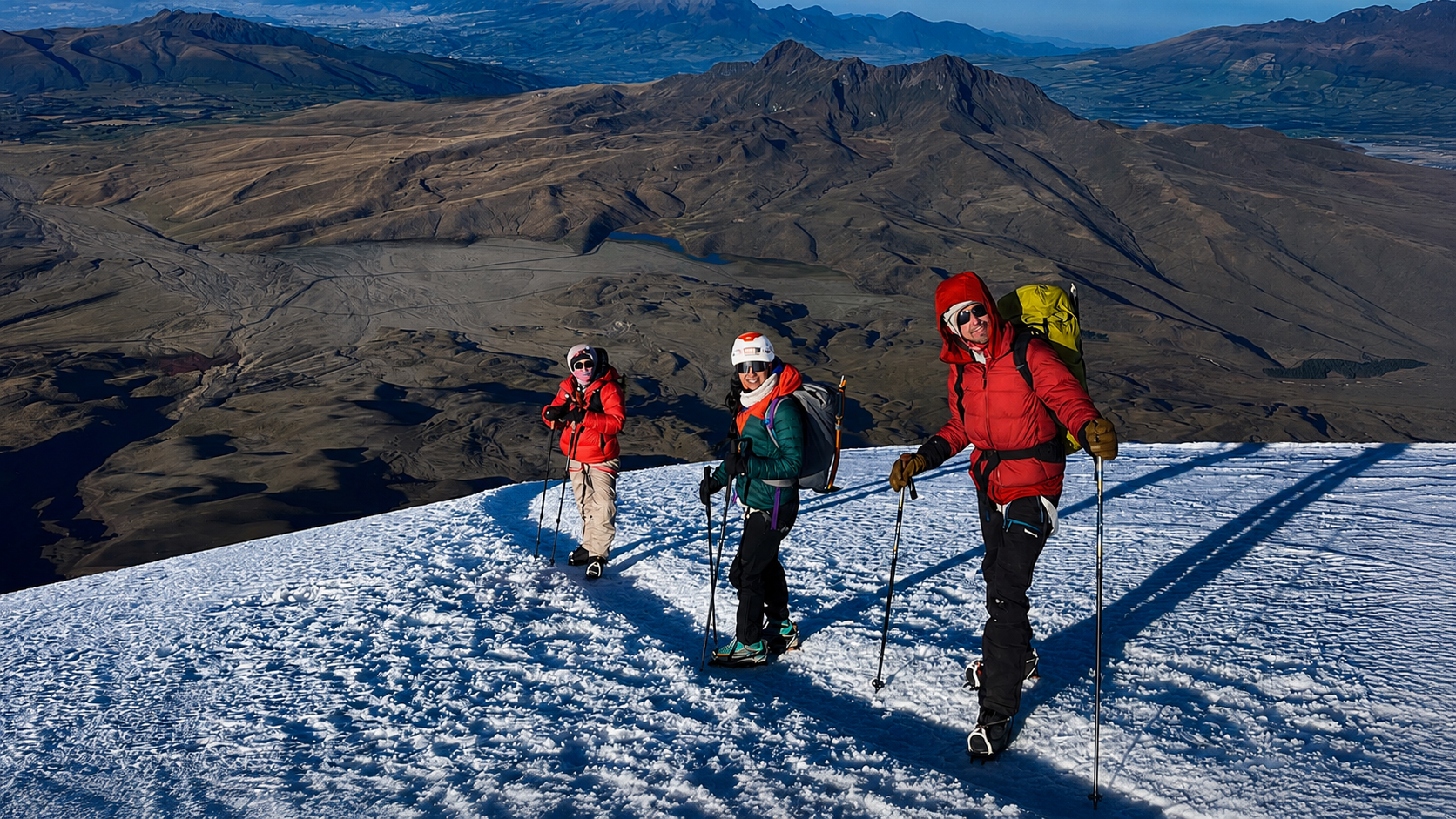
A progressive build-up We start on the trekking peaks around Quito — Ilaló, Cerro Pasochoa and Rucu Pichincha — to acclimatize and get the legs moving. From there the team moves to Cayambe (5,790 m), where our guides run a full glacier school on the Hermoso Glacier: cramponing, ice-axe use, self-arrest, rope-team travel, crevasse rescue and glacier navigation, before putting those skills straight to work on the summit.
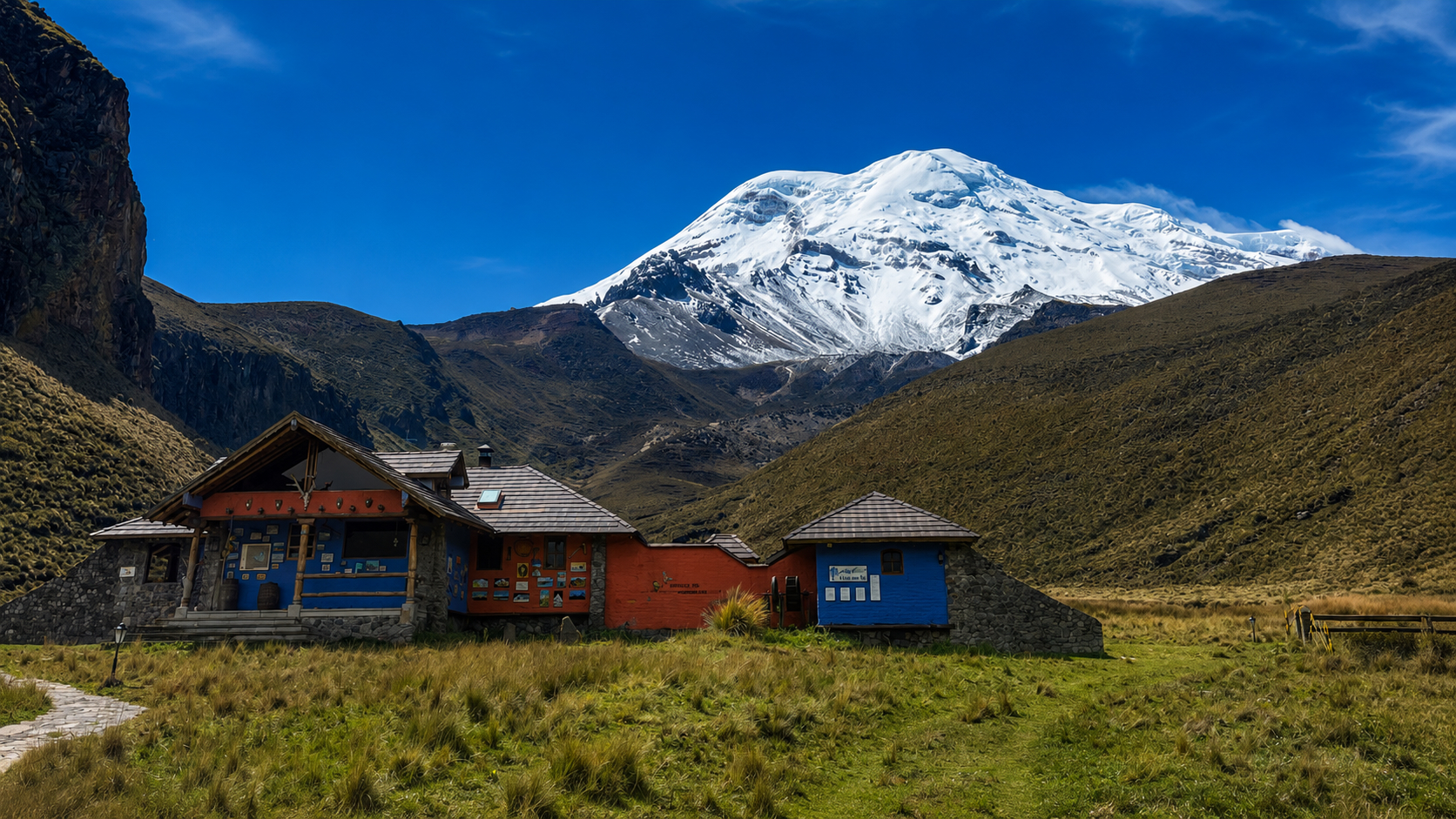
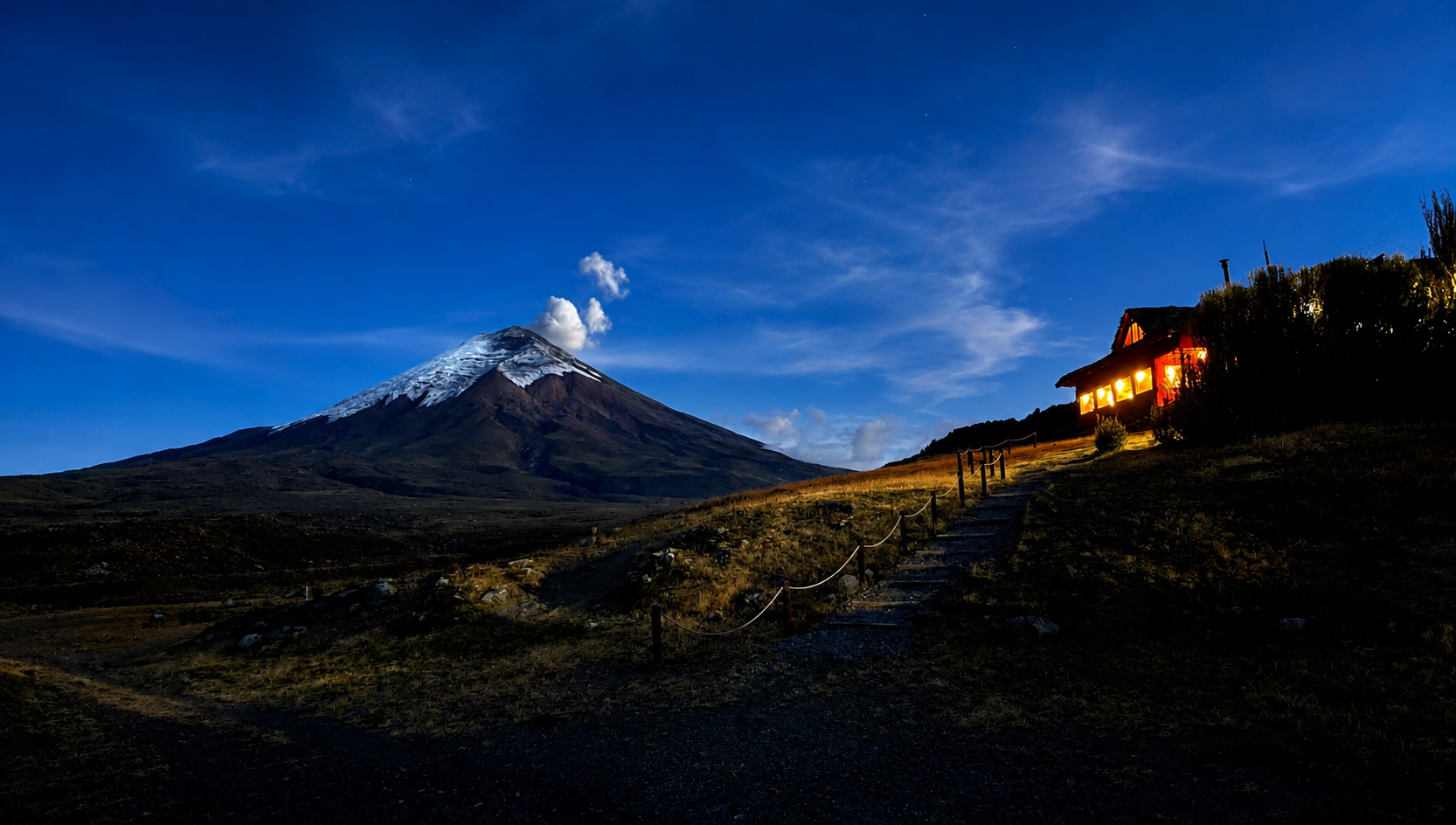
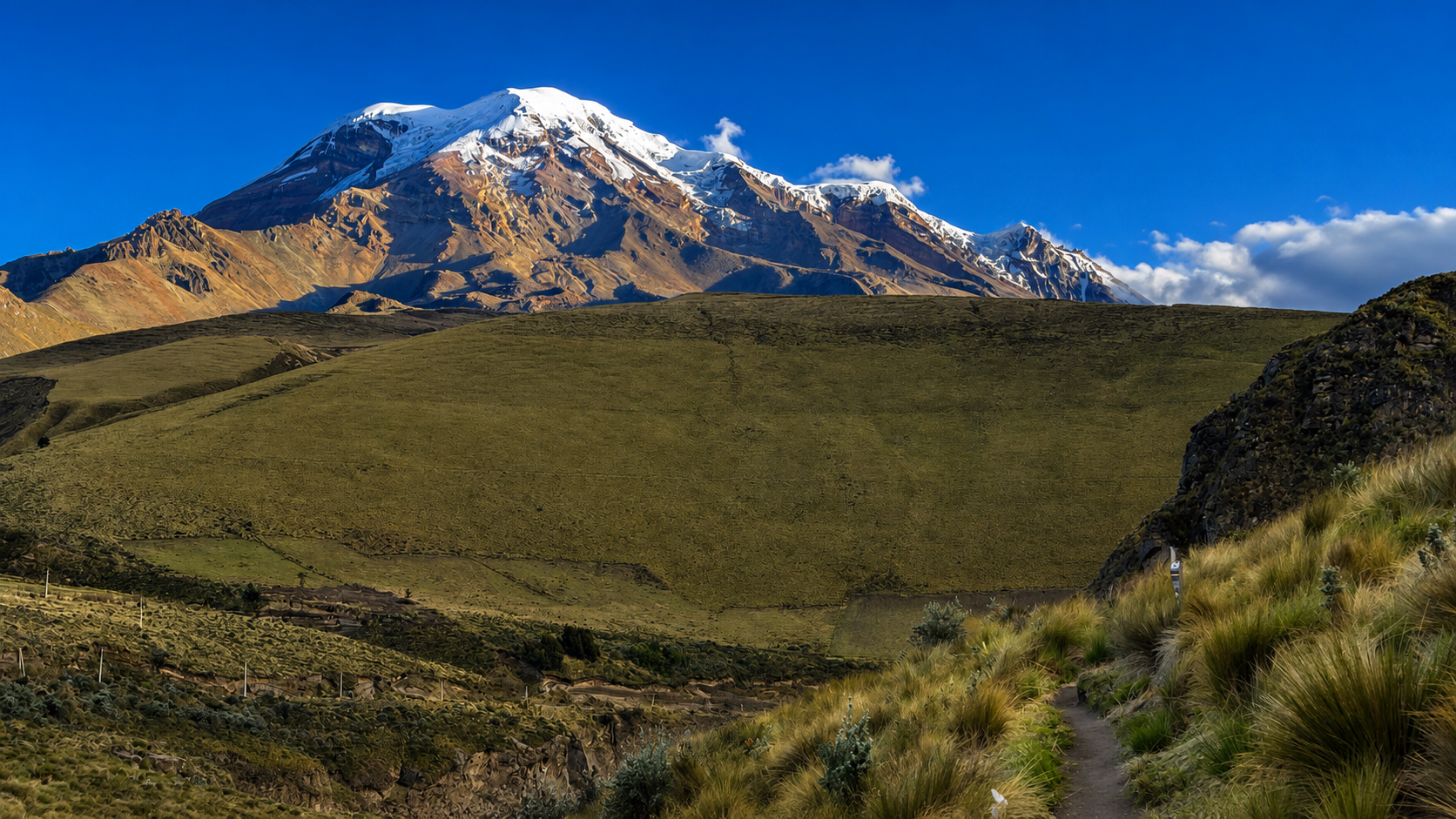
Cotopaxi and Chimborazo Next comes Cotopaxi (5,897 m), the iconic cone of the Avenue of the Volcanoes, climbed from the José Ribas hut. The expedition finishes on Chimborazo (6,310 m / 20,702 ft), Ecuador's highest mountain and — because of the equatorial bulge — the point on the Earth's surface farthest from the centre of the planet. The route climbs both névé and hard glacial ice from a high camp at Stübel.
Culture, haciendas and cloud forest Between mountains we stay in restored haciendas, some dating back to the early 1800s and now beautiful country hotels. Rest days include the cloud forest, local markets and the colonial centre of Quito — the trip is as much a cultural and ecological journey as a climbing one.
Activities and Risks Glacier mountaineering with crampons, ice axe and rope teams; acclimatization hiking; hut and tent camping; road travel across the highlands. Risks include altitude illness, crevasse fall, cold and high wind on summit days, intense equatorial UV and objective volcanic hazards.
(02) Highlights
Trip highlights.
- 01Three glaciated summits: Cayambe 5,790 m, Cotopaxi 5,897 m and Chimborazo 6,310 m
- 02Ecuador's highest peak — and the farthest point on Earth from its centre
- 03A full glacier school on the Hermoso Glacier before the first summit
- 04No technical climbing experience or previous altitude required
- 05Nights in restored 19th-century haciendas between mountains
- 06Cloud forest, Andean markets and colonial Quito on rest days
- 07A contingency day reserved for the summit weather window
(03) Day by day
Itinerary.
- Day 01ARRIVE IN QUITO
Arrival in Quito (2,850 m), transfer to the hotel and welcome briefing with the guide team. Hotel night.
- Day 02GEAR CHECK · ILALÓ
Full personal gear check, then an acclimatization hike on Ilaló above the Quito valley. Hotel night.
- Day 03CERRO PASOCHOA
Acclimatization hike on Cerro Pasochoa, an eroded volcano with cloud-forest slopes and views of the whole Avenue of the Volcanoes. Hotel night.
- Day 04RUCU PICHINCHA
Acclimatization hike on Rucu Pichincha (4,700 m), the highest point of the acclimatization phase so far. Transfer to a hacienda for the night.
- Day 05TRAVEL TO CAYAMBE
Drive to the Cayambe refuge at around 4,600 m on the flank of the volcano. Afternoon rest and route briefing. Hut night.
- Day 06GLACIER SCHOOL · HERMOSO GLACIER
Full day of skills practice on the Hermoso Glacier: crampon technique, ice-axe use and self-arrest, rope-team travel, anchors and crevasse rescue. Hut night.
- Day 07SUMMIT CAYAMBE · 5,790 M
Alpine start for the first summit of the trip on glaciated terrain. Descent to the refuge, pack up and transfer to a hacienda for the night.
- Day 08TRAVEL TO THE COTOPAXI REGION
Rest and recovery day travelling south through the Avenue of the Volcanoes. Hacienda or lodge night.
- Day 09COTOPAXI NATIONAL PARK · JOSÉ RIBAS HUT
Enter Cotopaxi National Park and hike up to the José Ribas hut at 4,800 m. Early dinner and rest before the summit push. Hut night.
- Day 10SUMMIT COTOPAXI · 5,897 M
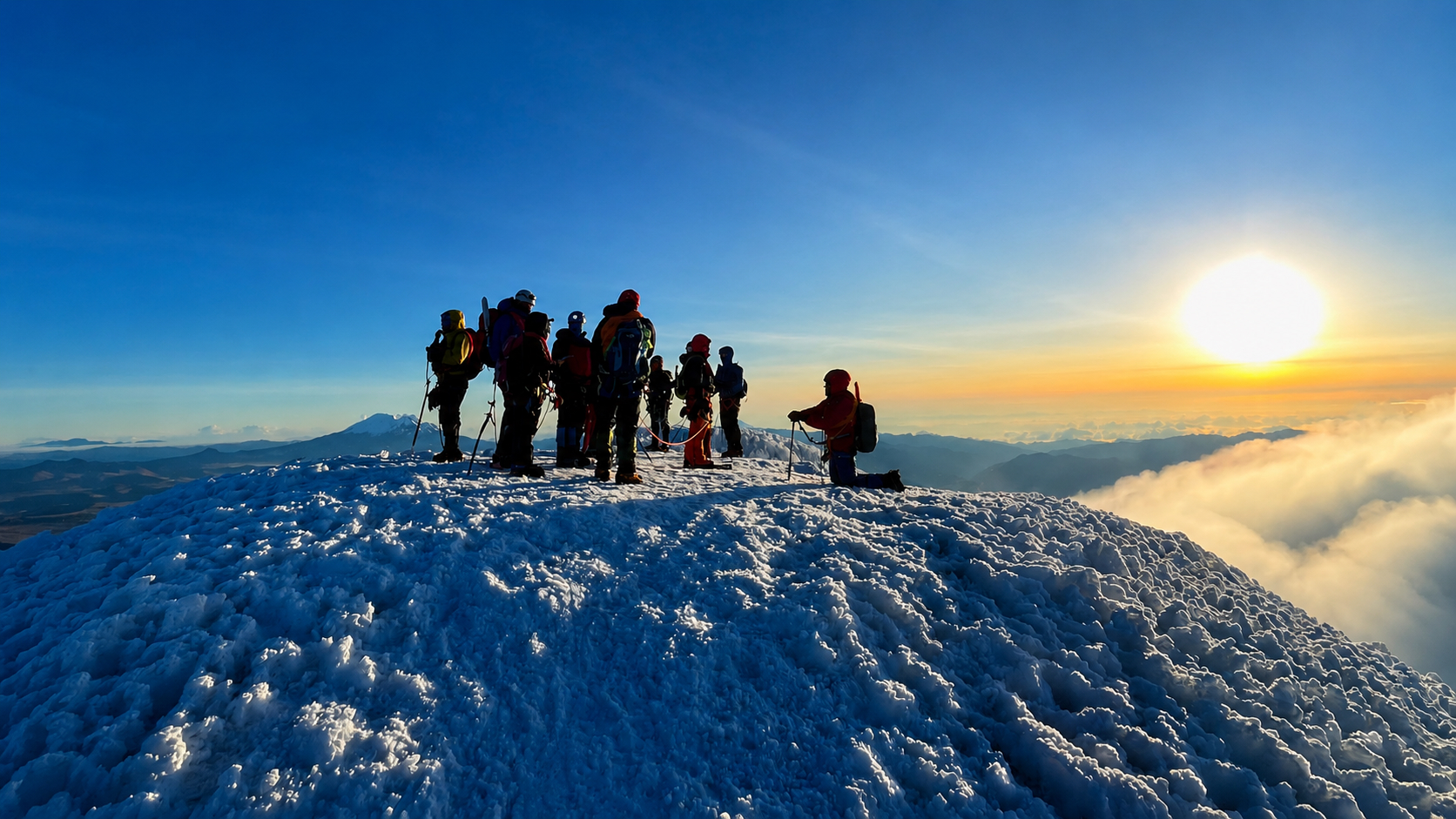
Midnight start for the classic glacier route on Cotopaxi's north side, reaching the crater rim at sunrise. Descent to the hut and on to a lodge for the night.
- Day 11TRAVEL TO CHIMBORAZO
Transfer south to the Chimborazo area, crossing the high páramo where vicuñas graze. Lodge night.
- Day 12HIKE TO STÜBEL CAMP
Load up and hike to high camp at Stübel on the flank of Chimborazo. Porters carry the group equipment. Camping night.
- Day 13SUMMIT CHIMBORAZO · 6,310 M
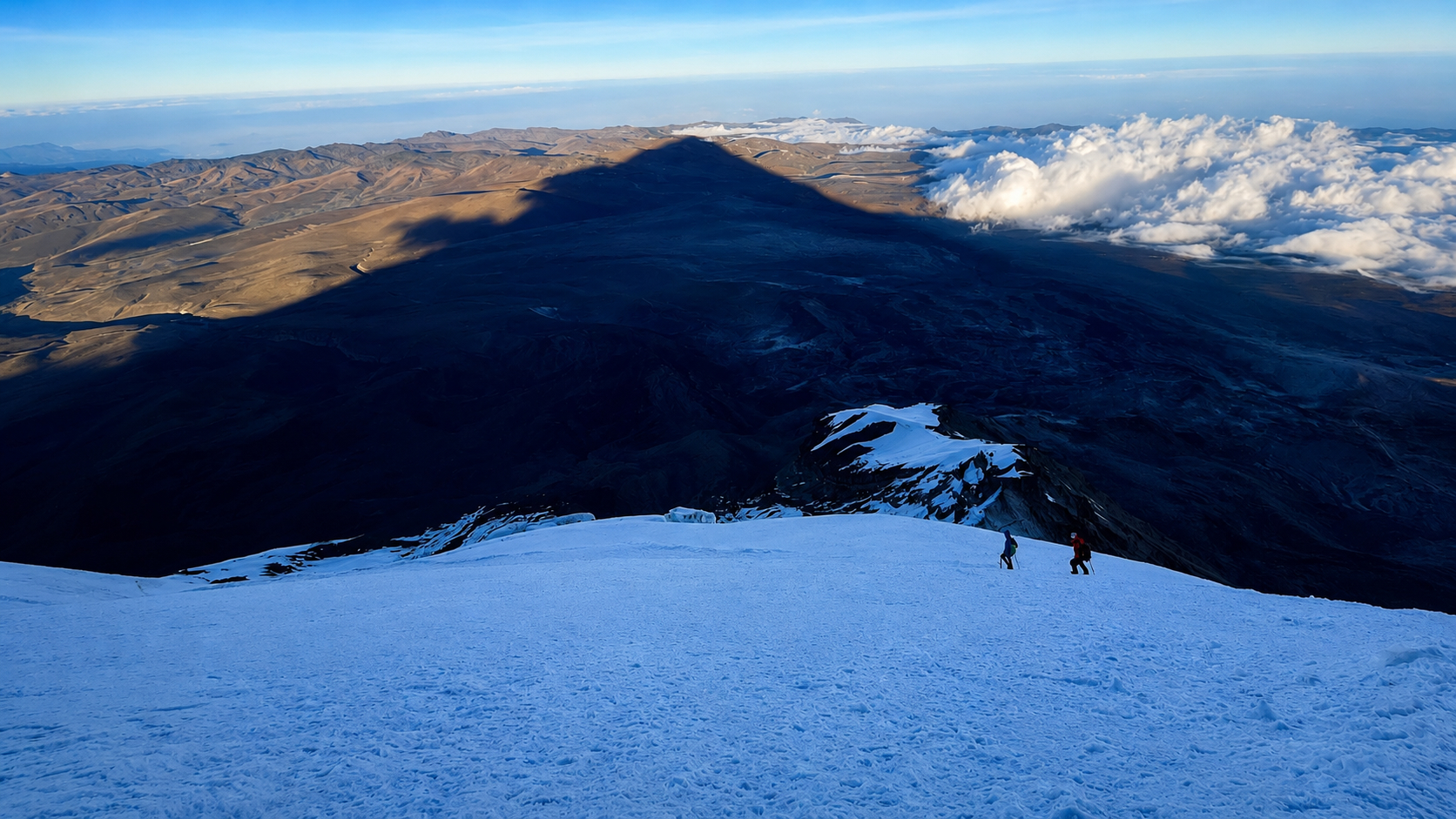
The big day: a long night start on névé and hard glacial ice to the Whymper summit at 6,310 m / 20,702 ft. Descent all the way to the road and transfer to a hotel.
- Day 14CONTINGENCY DAY · RETURN TO QUITO
Reserve day held for weather or a second summit attempt. Otherwise, return to Quito with time in the colonial old town. Hotel night.
- Day 15DEPART FROM QUITO
Transfer to the airport and end of the program.
(04) Logistics
What's included.
Included
- +Qualified and experienced mountain guides, with a 1:2 ratio on summit days
- +All expedition organisational requirements and permits
- +Land transport within Ecuador from Quito
- +Lodging in hotels, haciendas, huts and tents on a shared basis during the expedition
- +All trek and mountain food, excluding lunches and dinners in hotels, haciendas and lodges
- +Group equipment: ropes, tents, stoves and all supplies needed for a safe summit bid
- +Porters on Chimborazo to carry group equipment
- +Climbing permits, National Park fees and museum admissions
Not included
- −International flights to and from Quito
- −Lunches and dinners in hotels, haciendas and lodges, and all drinks
- −Extra nights of accommodation not specified in the itinerary
- −Travel insurance, including medical evacuation and trip cancellation
- −Personal climbing gear per the recommended Gear List
- −Tips for guides and local staff, and personal expenses
- −Any costs associated with early departure from the expedition
(05) Gear & safety
Gear
- Mountaineering boots suitable for glacier travel, plus step-in crampons and a walking ice axe.
- Climbing harness, helmet and two locking carabiners — rope-team hardware is reviewed in the glacier school.
- Layered clothing: base layers, fleece or synthetic insulation, a light down jacket and a waterproof GORE-TEX shell jacket and pants. No cotton.
- Glove system: liner, midweight and warm mitts. Warm hat, buff and balaclava for the pre-dawn summit hours.
- Category 4 glacier glasses and goggles — equatorial UV at 6,000 m is extreme. High-factor sunscreen and lip protection.
- Sleeping bag rated to −10 °C, insulated pad, headlamp with spare batteries, 40–55 L pack and trekking poles. Full gear list sent after registration.
Safety
- Certified guides with glacier rescue and Wilderness First Responder training
- A progressive acclimatization schedule: trekking peaks, then Cayambe, Cotopaxi and Chimborazo in ascending order
- A full glacier school before the first summit — no previous technical experience required
- Daily health checks: oxygen saturation, heart rate and altitude symptom monitoring
- Radios, medical kit and supplementary oxygen carried by the guide team
- A contingency day in the itinerary and a coordinated evacuation protocol — travel insurance with medical evacuation is mandatory
(06) FAQ
Questions.
Do I need previous climbing experience?+
No technical climbing experience is required, although you should have previous backpacking or trekking experience and be comfortable with long days on your feet. All glacier skills are taught on the Hermoso Glacier before the first summit.
Do I need previous altitude experience?+
No. The itinerary is built around progressive acclimatization, which is why we spend the first four days on trekking peaks around Quito before touching a glacier. Excellent physical fitness, however, is essential — train consistently for several months before the trip.
When is the best season?+
Ecuador can be climbed year-round, but the most stable windows are November to February and June to August. We schedule departures inside those windows.
Do we summit all three volcanoes?+
That is the objective and most teams do, but summits always depend on weather, conditions and the health of the group. The contingency day gives us one extra chance at the most important window.
How much does the program cost?+
The price depends on the size of your group and the dates chosen — larger groups get lower per-person rates. Contact us with your group size and preferred dates and we will send a detailed quotation.
Is this trip suitable for a university outdoor club?+
Very much so. It is one of our best options for club teams: no technical prerequisites, a real skills curriculum on the glacier, three summits, and a strong cultural component in the haciendas, markets and cloud forest.
(07) Request this expedition
Ready for the Ecuador Volcanoes?
Tell us your group size, target dates and objectives. Our basecamp team replies within 48 hours with a tailored proposal.