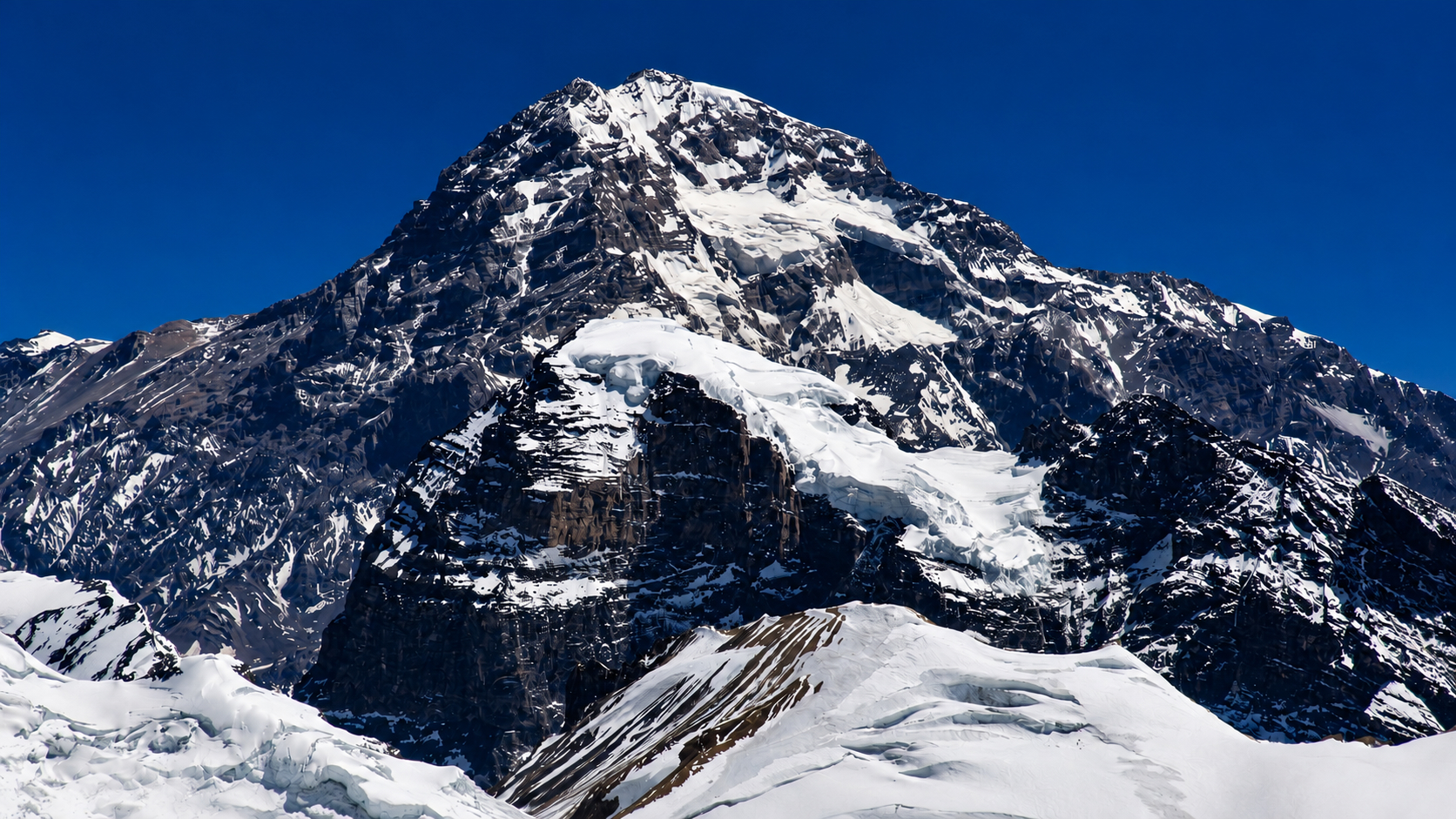
ACONCAGUA6,962 M
The highest mountain in the Americas by the Normal Route — a 12-day expedition from Mendoza through the Horcones valley, Plaza de Mulas and the high camps to the summit at 6,962 m.
Duration
10 – 12 days
Grade
Advanced · Extreme Altitude
Altitude
6,962 M (22,841 FT)
Season
NOVEMBER – FEBRUARY (AUSTRAL SUMMER)
(01) Overview
The roof of the Americas.
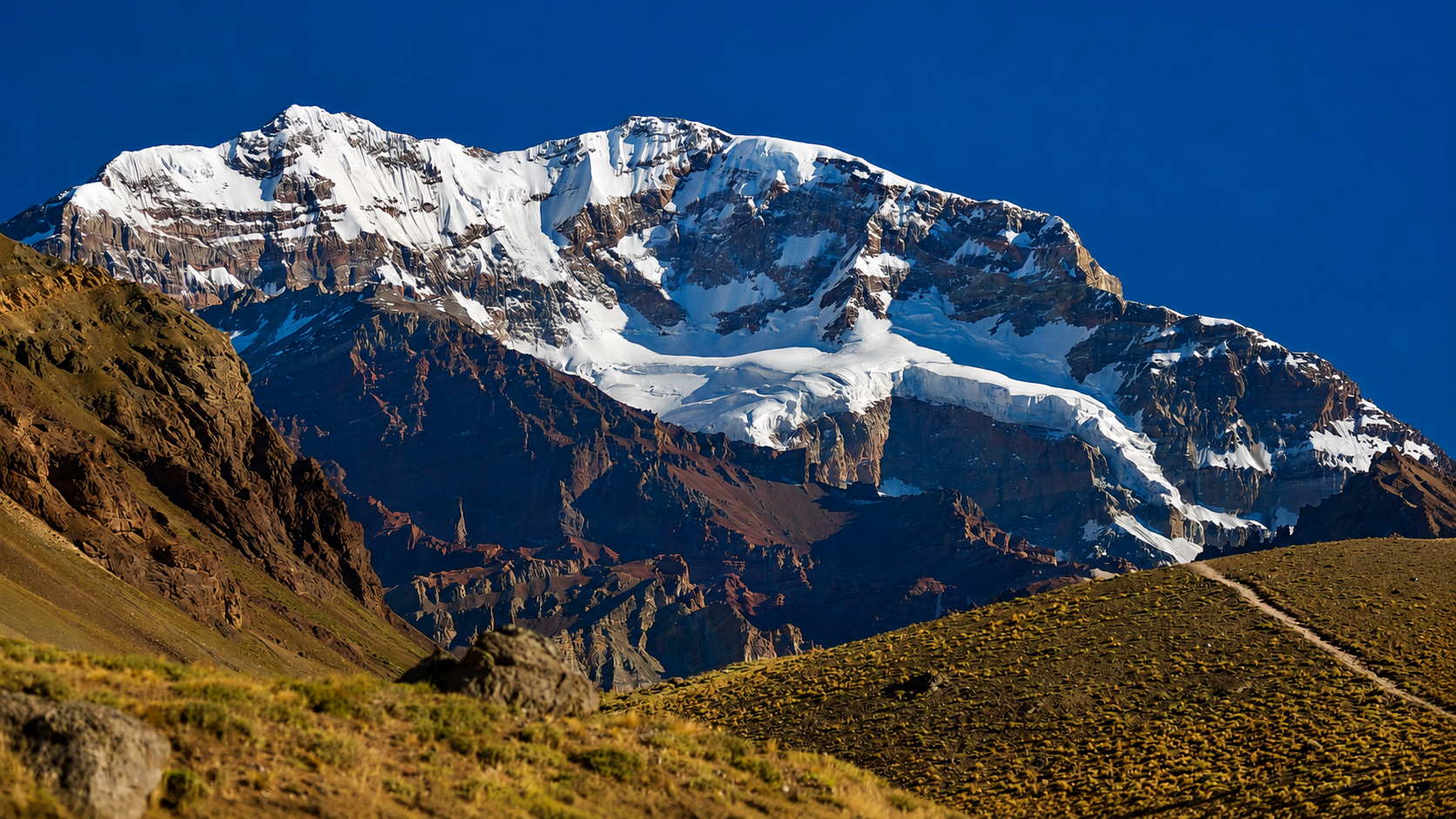
At 6,962 m (22,841 ft), Aconcagua is the highest mountain outside Asia and the highest point of both the western and southern hemispheres. The Normal Route on the northwest side is non-technical — no ropes, no glacier travel — but it is a serious expedition: extreme altitude, dry cold, fierce wind and long days of load carrying between camps.
The Normal Route We approach through the Horcones valley from the Argentine side, trekking in via Confluencia to Plaza de Mulas (4,300 m), the historic base camp of the mountain. From there the team works progressively up the northwest ridge — Plaza Canadá, Nido de Cóndores and high camp at Cólera — using carry-and-move days that double as acclimatization.
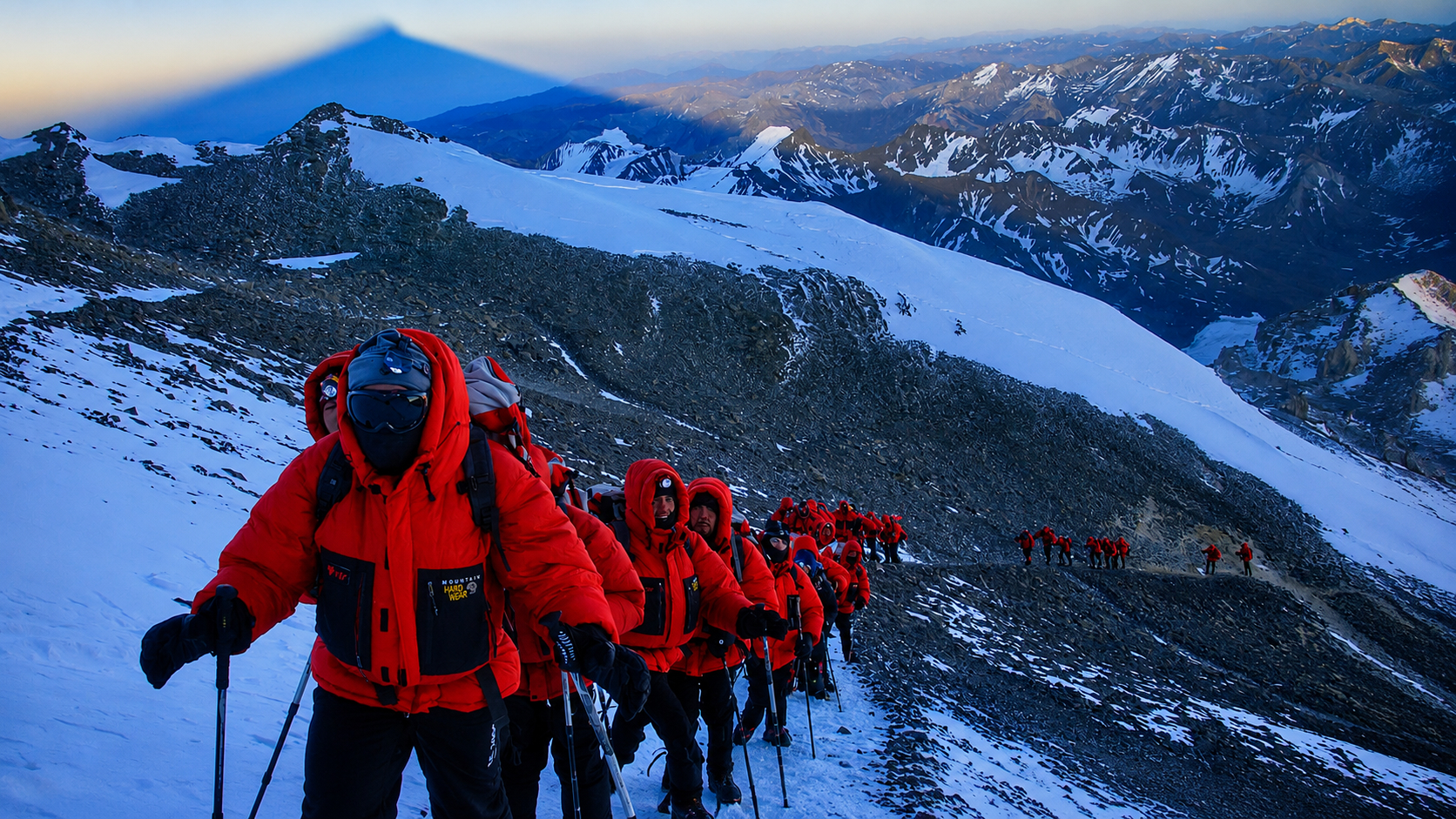
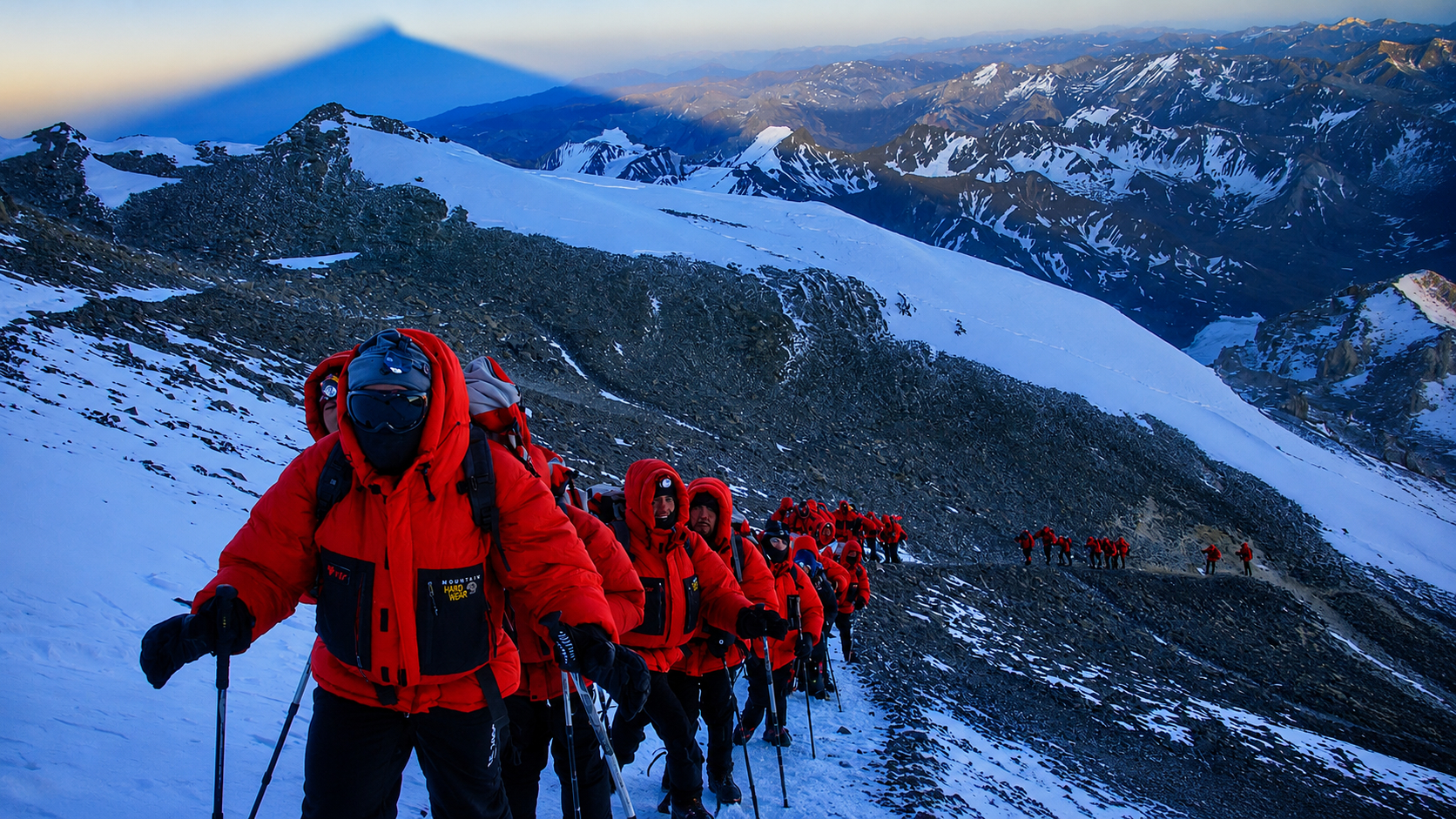
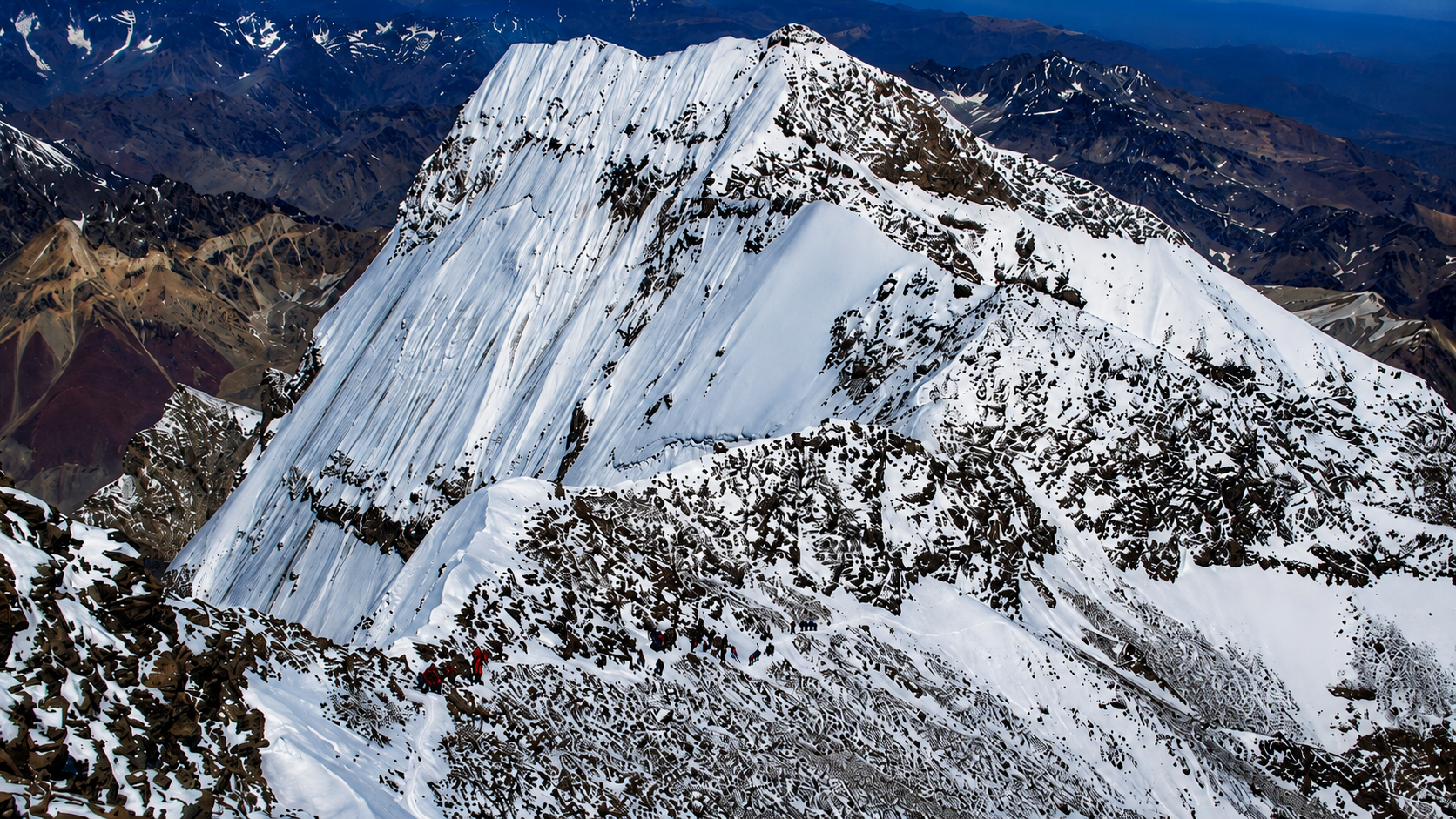
Summit day From high camp the route follows the Gran Acarreo and the Canaleta, a long, steep scree and snow gully leading to the Filo del Guanaco and the summit cross. It is a 10 to 14 hour day above 6,000 m — physically the hardest single day most climbers will ever face — rewarded by a view across the entire spine of the Andes.
A 12-day format Classic Aconcagua expeditions run around 20 days. Our 10 to 12-day format is built for climbers who arrive already acclimatized — either from a previous high-altitude program with us (Ojos del Salado, Parinacota, Cerro El Plomo) or from structured altitude preparation at home. Three summit windows are held inside the itinerary for weather.
Activities and Risks High-altitude trekking and load carrying, camping at extreme altitude, scree and snow slopes, and long road transfers. Risks include altitude illness (AMS, HACE, HAPE), extreme cold and windchill, dehydration, whiteouts and rockfall in the Canaleta.
(02) Highlights
Trip highlights.
- 01The summit of the Americas: 6,962 m / 22,841 ft, the highest point outside Asia
- 02The classic Normal Route from Argentina — non-technical, no ropes or glacier travel
- 03Trek in through the Horcones valley to the legendary Plaza de Mulas base camp
- 04Progressive carry-and-move days through Canadá, Nido de Cóndores and Cólera
- 05Three summit windows built into the itinerary for weather
- 06Full base-camp infrastructure: dome tents, cooked meals, radios, oximeters and a Gamow bag
- 07Mules carry group equipment to and from base camp
(03) Day by day
Itinerary.
- Day 01ARRIVE IN MENDOZA
Arrival in Mendoza (760 m). Transfer to the hotel, permit paperwork and a full gear check and briefing with the guide team. Hotel night.
- Day 02DRIVE TO PENITENTES · TREK TO CONFLUENCIA
Early drive up the Uspallata valley to the Horcones trailhead (2,950 m). Load the mules and trek to Confluencia camp at 3,400 m. Camping night.
- Day 03TREK TO PLAZA DE MULAS · 4,300 M
The long walk up the Playa Ancha and the Horcones valley to Plaza de Mulas, the base camp of Aconcagua, at 4,300 m. Seven to nine hours of walking. Camping night at base camp.
- Day 04CARRY TO PLAZA CANADÁ
Acclimatization carry with equipment and food to Plaza Canadá (5,050 m), then descent to sleep at base camp — climb high, sleep low. Medical check by the park doctors.
- Day 05MOVE TO PLAZA CANADÁ · 5,050 M
Rest morning, then move up to camp at Plaza Canadá with personal gear. Set up camp and hydrate. Camping night.
- Day 06MOVE TO NIDO DE CÓNDORES · 5,550 M
Move up the exposed slopes to Nido de Cóndores, a broad plateau with views over the Horcones glacier and the Andes to the west. Camping night.
- Day 07MOVE TO HIGH CAMP · CÓLERA 5,970 M
Short but demanding move to high camp at Cólera, just below 6,000 m. Early dinner, melt water and rest before the summit push. Camping night.
- Day 08SUMMIT WINDOW 1 · 6,962 M
Pre-dawn start for the summit: Portezuelo del Viento, Independencia, the Gran Acarreo traverse and the Canaleta to the Filo del Guanaco and the summit cross at 6,962 m. Ten to fourteen hours round trip back to high camp.
- Day 09SUMMIT WINDOW 2 · RESERVE
Second summit window held for weather or for a team that needed an extra rest day. If the summit was reached on Day 08, we begin descending toward base camp.
- Day 10SUMMIT WINDOW 3 · RESERVE
Third and final summit window. Aconcagua's weather is the main variable on the mountain and these reserve days are what make the difference between an attempt and a summit.
- Day 11DESCEND TO PLAZA DE MULAS
Break down the high camps and descend to base camp. Hot food, showers at Plaza de Mulas and a first celebration with the team. Camping night.
- Day 12TREK OUT · RETURN TO MENDOZA
Trek out through the Horcones valley to the trailhead, transfer back to Mendoza and a celebration dinner. Hotel night or onward travel. End of the program.
(04) Logistics
What's included.
Included
- +Certified high-altitude mountain guides, with a 1:3 ratio
- +Expedition organisation, logistics and assistance with the Aconcagua climbing permit
- +Land transport Mendoza – Horcones trailhead – Mendoza
- +Two hotel nights in Mendoza on a shared basis (arrival and end of the expedition)
- +Mules to carry group and personal equipment to and from base camp
- +Full-service base camp at Plaza de Mulas: dome tents, cooked meals and dining tent
- +All expedition food on the mountain and all group equipment: tents, stoves, cooking gear
- +Medical kit, radios, satellite phone, pulse oximeters and Gamow bag
Not included
- −International and domestic flights to and from Mendoza
- −The Aconcagua climbing permit (variable by season and nationality)
- −Meals and drinks in Mendoza and any extra hotel nights
- −Optional helicopter flight between the trailhead and base camp
- −Travel insurance, including high-altitude medical evacuation and trip cancellation
- −Personal climbing gear per the recommended Gear List
- −Tips for guides, base-camp staff and muleteers, and personal expenses
- −Any costs associated with early departure from the expedition
(05) Gear & safety
Gear
- Double or expedition-grade mountaineering boots rated for 6,000 m, plus crampons and a walking ice axe.
- Expedition down jacket, down or synthetic pants, and a full GORE-TEX shell jacket and pants. No cotton.
- Layered base and mid layers, glove system (liner, midweight, expedition mitts), balaclava, buff and warm hat.
- Sleeping bag rated to −20 °C or colder, plus an insulated sleeping pad — nights above 5,500 m are brutally cold.
- Category 4 glacier glasses and goggles, high-factor sunscreen and lip protection.
- 65–75 L pack, summit pack, insulated bottles (no hydration bladders — they freeze), headlamp with spare batteries and trekking poles. Full gear list sent after registration.
Safety
- Certified high-altitude guides with Wilderness First Responder training
- Progressive carry-and-move acclimatization profile: climb high, sleep low
- Daily health checks: oxygen saturation, heart rate and altitude symptom monitoring
- Mandatory medical check by the park doctors at Plaza de Mulas
- Radios, satellite phone, supplementary oxygen and a Gamow bag carried by the team
- Three summit windows and a conservative turnaround policy on summit day
- Coordinated evacuation protocol — travel insurance with high-altitude medical evacuation is mandatory
(06) FAQ
Questions.
Is Aconcagua a technical climb?+
No. The Normal Route involves no roped climbing or glacier travel — it is high-altitude trekking on scree, snow and rock. What makes it hard is the altitude, the cold, the wind and the sustained effort of carrying loads between camps for days on end.
Why 12 days instead of the classic 20?+
Because the itinerary assumes you arrive already acclimatized, either from a previous high-altitude program or from structured altitude preparation at home. If you prefer a longer, more conservative profile, we can extend the expedition with additional acclimatization days.
How fit do I need to be?+
Excellent physical condition is essential. You should be able to carry a 15–20 kg pack for 6–8 hours at altitude, on consecutive days. Train consistently for at least six months with endurance, strength and load-carrying sessions.
Do I need previous altitude experience?+
Yes. Previous experience above 5,000 m is required for this format. Our Ojos del Salado, Parinacota and Cerro El Plomo programs are excellent preparation for Aconcagua.
What are the summit chances?+
Weather is the main variable. The three reserve summit windows in the itinerary significantly increase the odds, but no responsible operator guarantees a summit — the guide's turnaround decision is always final.
How much does the program cost?+
The price depends on the size of your group and the dates chosen, and does not include the Aconcagua climbing permit, which varies by season and nationality. Contact us with your group size and preferred dates and we will send a detailed quotation.
(07) Request this expedition
Ready for Aconcagua?
Tell us your group size, target dates and objectives. Our basecamp team replies within 48 hours with a tailored proposal.